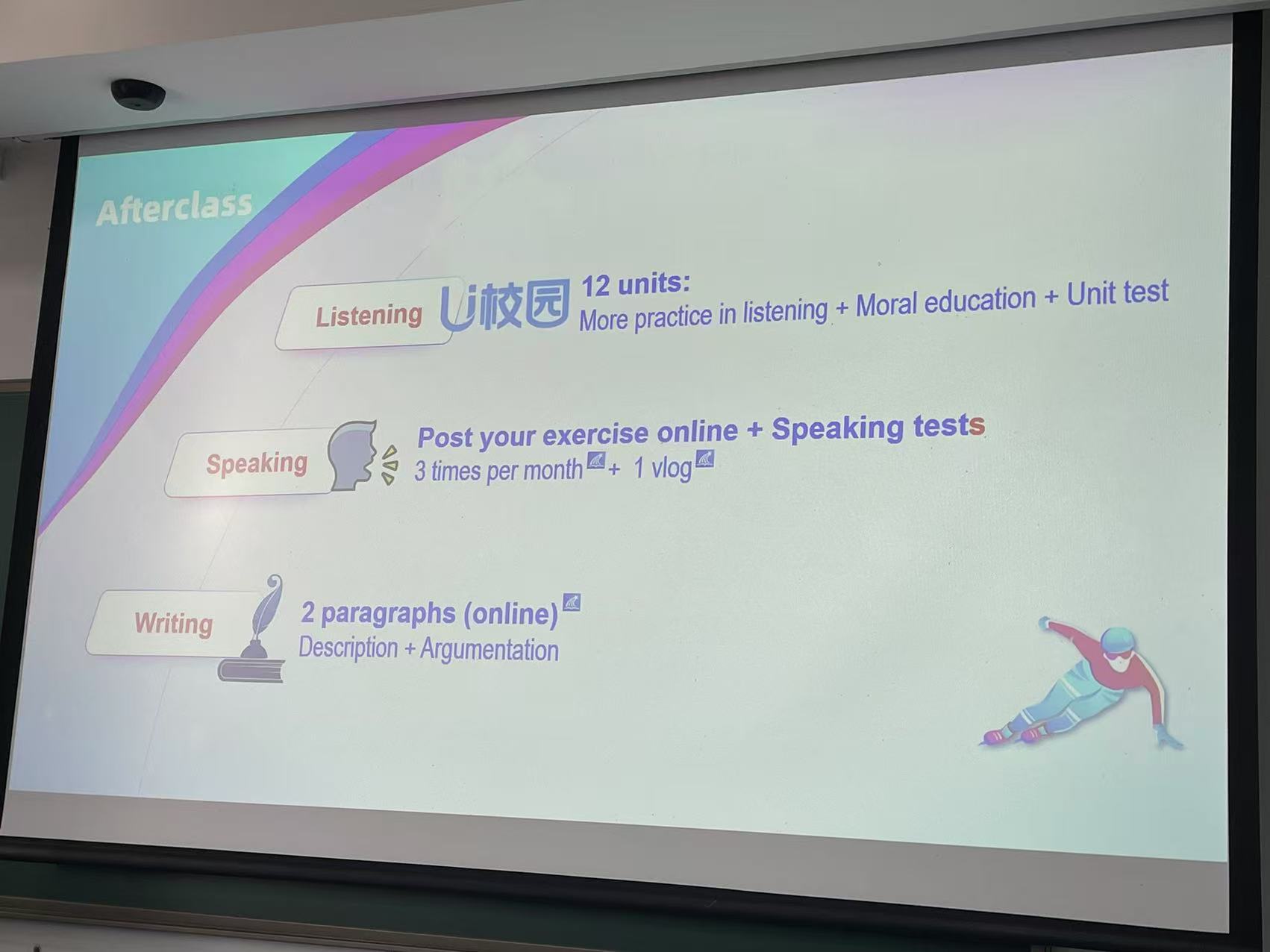
You've had the opportunity to connect with a professor at a university in the United States while seeking a summer internship. To assess your spoken English skills and gain a deeper understanding of who you are, the professor has suggested an innovative approach. You are required to create a vlog that showcases your campus life. This could include sharing your experiences in the lab, describing a sanctuary on campus that you visit when you're feeling down, or detailing how you spend a typical school day. This vlog will provide the professor with valuable insights into your English proficiency, as well as the culture and environment of your university.
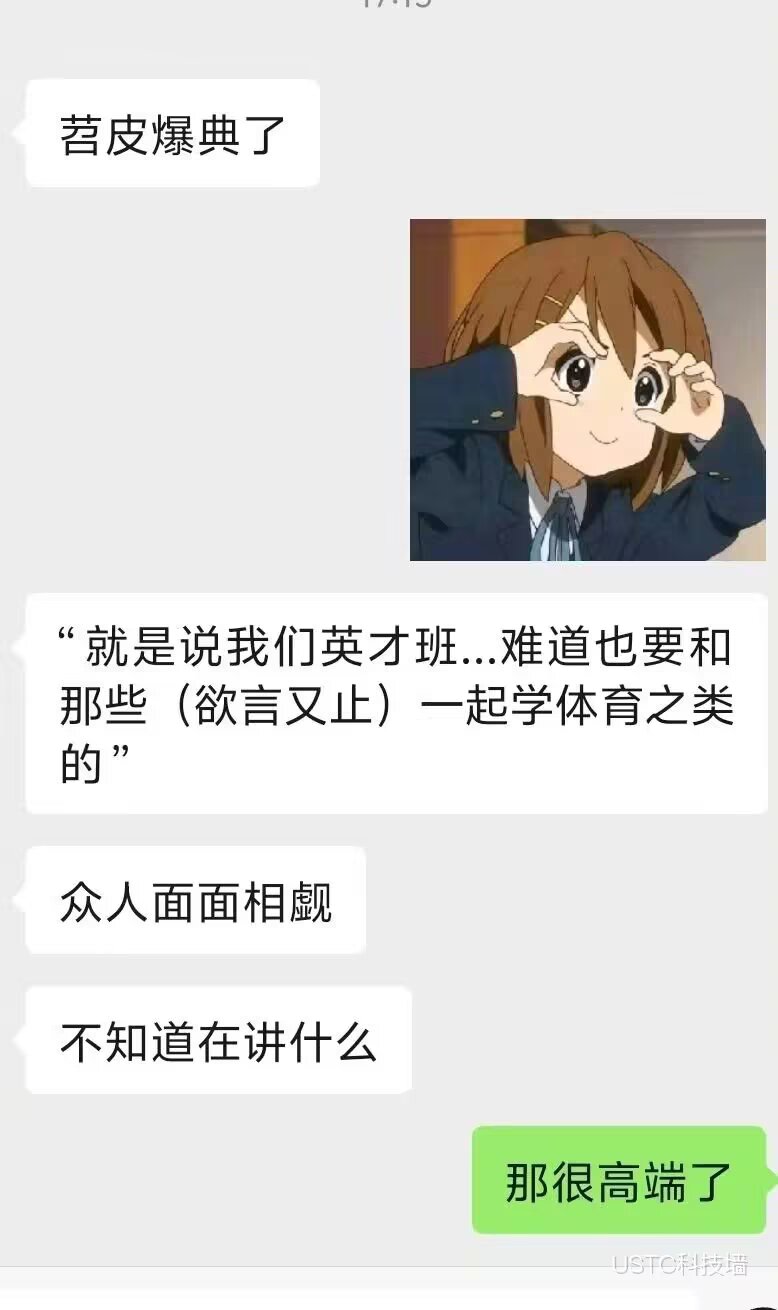
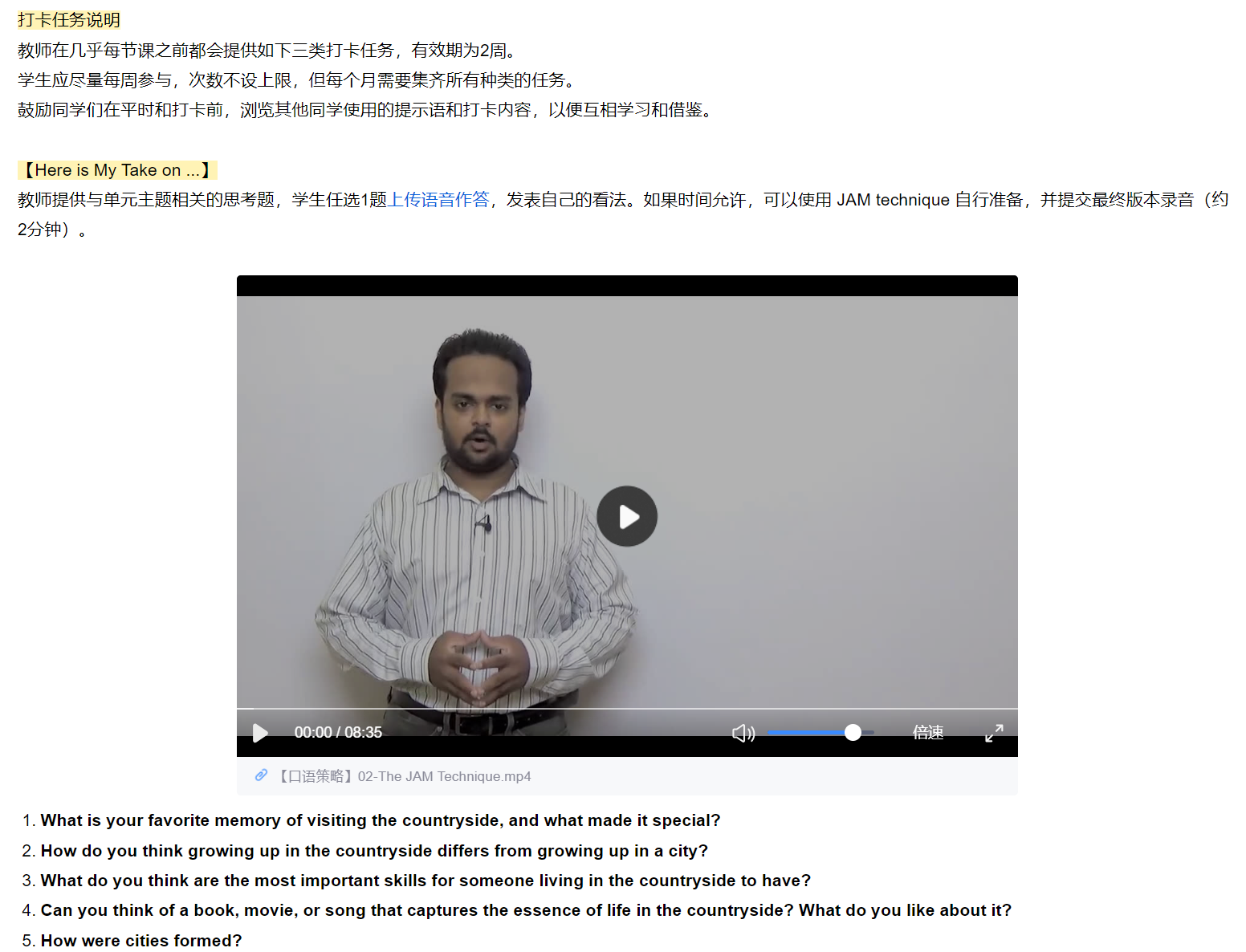
期中口试是两人一组,共同从预制的三个话题中抽取一个,围绕其进行讨论。我抽到的题目大概是如果2050年太空航行成为了日常,会不会支持子孙往火星移民。期末口试是跟老师就抽到的问题聊天,我抽了一个跟conflict between neighbors有关的,问你家和邻居家有没有矛盾,怎么解决的。说实话我跟邻居不熟,于是直接自爆把天聊死了,最后扯到舍友了都。Baker考前给我们说期末口试的问题是从平时打卡的问题里抽的,但这个题我怎么没印象()。其实英语交流进阶不单是英语进阶,交流也要进阶。作为一门语言,学英语的最终目的还是交流和沟通,而这些东西需要我们在生活中不断积累。
这也是学习外语很容易出现的一个现象。别人和你说话的时候。他嘴里蹦出来一个单词,你也许立刻就能知道是什么意思,按字面意思翻译就能应付99.9%的情况;但你向别人说话的时候,会下意识地用母语来形成思维,然后再去找一个对应的英文表达来满足语义。这个寻找的过程比把英语单词翻译成中文的难度要大得多,因为一句话意思是确定的,但可以有很多翻译选择(有时候这些选择还有细微的情感和意思差别)。比如把下面这个句子:“中国政府十分重视环境保护。”翻译成英文,你脑子里第一反应可能就是Chinese Government thinks environmental protection is very important.而不会特别容易想到attach great importance to这种比较高级的表达,但是当给出的句子是The Chinese Government attaches great importance to environmental protection.的时候,你一下就能明白他的意思。再加上语法、用语习惯、文化差异等等因素,用外语“创造”的过程比接收已有外语内容的过程要难得多。这就催生出一个矛盾:如果想要阶段性地提升英语水平,就要花上可观的时间和精力去练习说和写,而科大的同学们早已被巨大数理基础喷流冲得到处都是,哪会有这么多精力去提升自己可能用都用不上的外语呢?况且虽然有英语角和诗歌创作活动等等二课活动能够满足这一需求,也可能是当天学到的东西第二天就忘了。
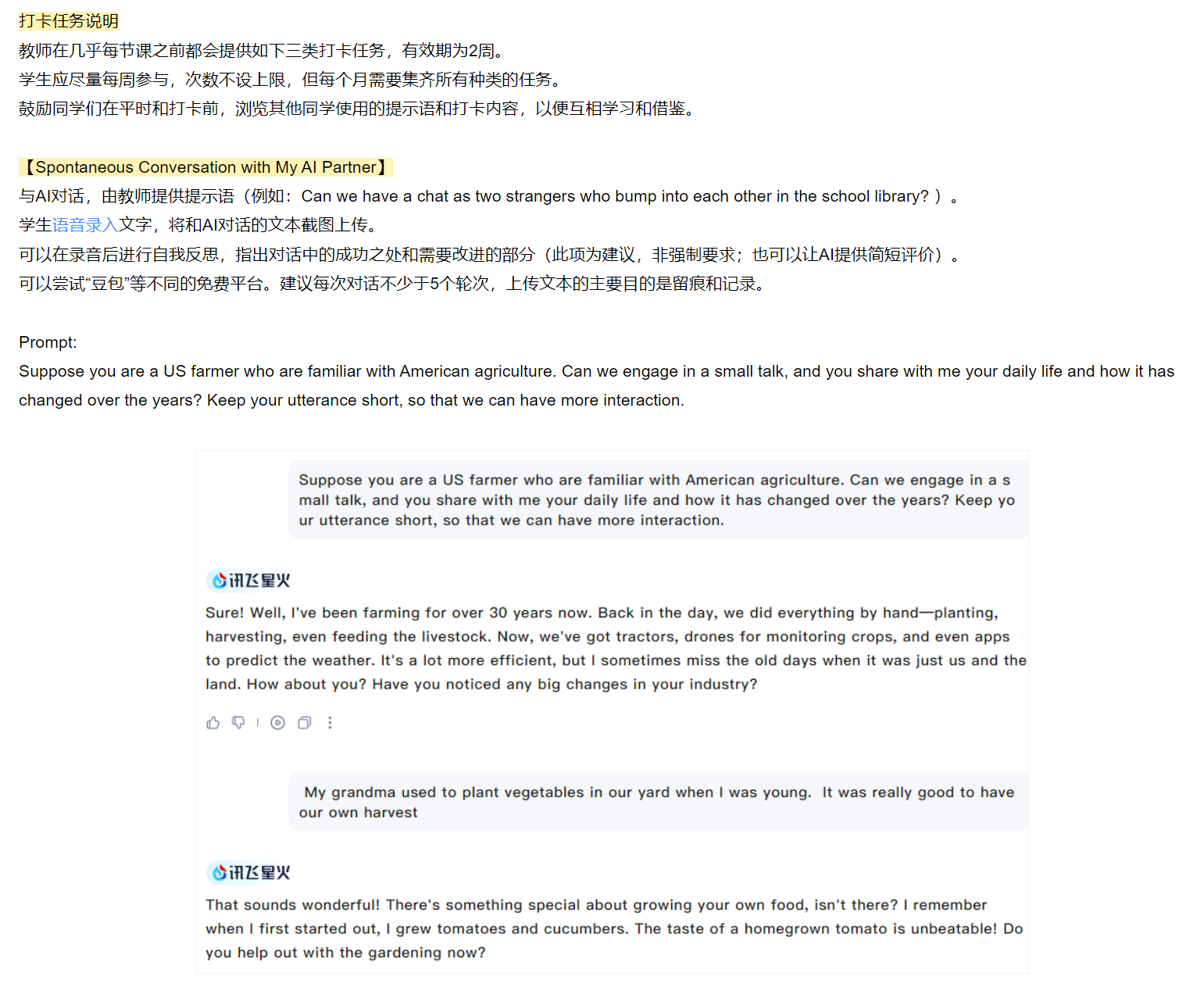
AI对话任务会由老师给出一个提示词,把提示词输入AI以后和AI对话。从输入提示词开始这项任务就展现出它的磨人,由于打卡要求除了提示词什么也没给,导致每次我都要废老大劲先读懂提示词才知道我要干什么(到不知道第几次打卡我才想起来用机翻先翻译一下)。然后就是AI的脑溢血操作,包括但不限于AI没有理解prompt里面的指令,AI逐渐脱离话题,AI应任务要求问出刁钻到根本不知道怎么回答的问题,跟AI辩论结果AI用联网搜索援引大量实例但我脑子空空只好认输,讨论农业然后在豆包上找了一个名叫“十六世纪白人农场主”的智能体对着他问 do you own any ni**er slave (我绝对没有种族骑士,豆包的智能体在创建的时候开发者可以提供三个对话选项,我看选项里有才选的)…… 最后一次打卡是让AI扮演托福的考官出口试题来做,也是免费体验上模拟考了。
③ 注意截止时间:周一班在3月18日之前每人发表 1 篇回帖;周三班随后为周一班的每篇发言提供回复,周三班请在3月27日之前完成。
Thank you for sharing these interesting experiences, though they may not so interesting for you. When New Year comes, I will also wonder - Is there anything interesting activities? Maybe yes. For me? Maybe no. As our government banned firecrackers owing to air-pollution and risk of fire, the atmosphere of New Year seems to be blurred. So, what's left? What's the meaning of New Year for us new generation?
You have mentioned that you are bored with chatting with and being asked by your relatives. I can fully understand this feeling as I would feel the same in the vacation. As our life become busier and busier in the morden society, we will tend to have our own time and space to do whatever we want. It's also my wish to stay at home without being interrupted by strangers. However, my relatives aren't always strangers. My family was once poor that my father almost missed the chance to go to college, thanks to my father's two uncles helped to pay the tuition. The situation of my mother was even harder as my grandpa passed away owing tto an accident when she was 17. Under the assistance of my grandma's brothers, she found a job that could help raise the family. My relatives are good to my parents and me, so it's kind of responsibility to show them that I have them in my heart. I also have good relationship with my cousins. Most of them are just kids and they are proud of having a big brother like me.
As for cashes, I tend to regard it as a blessing from our elder generation. The red pocket may be the most popular custom around the whole country. parents and grandparents gave out money, and children smile and buy their favorite toys and snacks. But unfortunately, the amount of the money inside the bag varys a lot from north to south. If you come from Guangdong or Fujian, you may have no more than 10 yuan in a single bag. Worst of all, your parents sometimes take your money away, frustrating, right? Although my parents seldom do that, I can understand them if they really do that because I'm the only child in my family, meaning when I receive, say, 200 yuan, my parents should give out 400 or 600. That's really a burden.
By the way your parents' fist is a little scary. That's also a common situation you will counter in the holiday when you're forced by your parents to do something you dislike. For example, my mom don't let me eat those high-fat and high-protein food, which is the most delicious ones on the festival menu. We almost had a fight. But at last I compromised and my mom also start to turn a blind eye. Everything is not a big deal as long as your parents still love you. And Spring Festival,in this case, is a chance for family members to enhance the link between.
Last but not least, I also write a complete(maybe not so complete) passage. If you are interested, you can find it just here and read it.
The “complete” passage I wrote myself
(I'm a student in the class of Wednesday, DO NOT REPLY THIS. I discovered that I need to rewrite after I'd finished this)
A recollection of Chinese new year
In my hometown Anyang in the north of Henan province, the celebration of New Year actually begins on Laba, the eighth day of the twelfth month of lunar calendar. We simmer a big pot of porridge with 8 kinds of corns and beans or more to represent our wish of harvest.
After the twenty-third of the twelfth lunar month, everything gets familiar with traditional northern New Year - worship the god of kitchen, clean the house, put up the couplets... Without crackers due to the environmental-protection bans, the atmosphere of festival gradually fade in recent years. If there’s something different in my home, it must be family meetings.
I live in a huge family, literally huge. Both my parents have dozens of siblings and cousins that I have to visit. As morden life divides our family into smaller parts, I am half a stranger to most of my cousin, and they completely strangers to me. Six year of studying out of hometown have taken me apart from my home. So when meetings began to come one and another, embarrassment seized me as I couldn’t recognize my relatives. I also don’t want to talk until late night. I want to go home, sleep or stay up or anything.
However when I realized that my cousins were looking at me with adoration, things had totally changed. Most of them are at least 10 years younger than me, except one who is going to take the College Entrance Examination this year. I began to realize that I’m the eldest son in our whole family. I have heavy responsibility to take, as my younger siblings are watching and waiting. I have to be not only a good son or student anymore, but also a good brother, a man to help and a model to be learnt from. Family may become apart, but relationship among will not.I knew that I must make these visits as I can, to my fathers, grandfathers and ancestors.
Tomorrow the sun will rise, the son will also rise.
You're right. Extended families have become a thing of the past, and nuclear families are here to stay. But as the population shrinks, will extended families make a comeback? Who knows ... By that time, you'll definitely know those relatives better.
As for "responsibility", I've also taken on a new one since last October. I came across a stray cat near our campus and took her home. She even traveled 1,000 kilometers to join me in my hometown for the Spring Festival. So everyday when I "rise", my life is filled with healing moments—feeding the cat, combing her fur, and of course, scooping her litter.
As a college student immersed in the world of programming, I often find myself caught in a whirlwind of uncertainty. The rapid advancements in artificial intelligence have left me feeling bewildered. Just a few years ago, I was thrilled about the prospect of mastering coding languages and the endless possibilities they offered. However, now I can't shake off the sinking feeling that my skills might soon become obsolete. I watch as AI tools effortlessly generate complex code, solve problems in seconds, and even learn from their mistakes without getting tired or impatient.
Every time I see an algorithm outperform human programmers, doubt creeps in. Will there be a place for someone like me in the tech industry when machines can do the work faster and more accurately? The thought of investing years of study into a skill that could be rendered useless is daunting. I find myself questioning not only my future career prospects but also the very essence of what it means to be a programmer in an era where AI seems to overshadow human capability.
I would love to hear the thoughts and perspectives of my peers on this issue, as well as any advice on how to navigate this uncertain future.
AI Strives for Human Thrive. – To Tom
Dear Tom,
I truly understand how you feel; I’m a freshman majoring in AI myself. I often ask the same questions you do. AI development brings us convenience, but it also raises ethical issues that, just a few years ago, belonged only to science fiction. I can’t give you definitive answers about AI, algorithms, or programmers, but I can share some thoughts—perhaps they’ll spark new ideas for you.
You mentioned that AI can already solve programming problems, which disappoints you. AI excels at repetitive tasks; it can study a specific solution ten-thousand times faster than a human, because it is, after all, a computer. However, current AI still lacks creativity and deep comprehension. It cannot invent a truly new algorithm or grasp a slightly ambiguous request—areas in which humans still outperform it. Think of AI as your assistant: use it to debug code and learn new concepts.
You also worry about being replaced by AI, since it is faster, stronger, and “smarter.” But remember: AI makes mistakes. Today’s systems have low explainability—meaning we often cannot understand why they produce a given answer—so their errors can go unnoticed. Although designers try to embed rules and morals into AI, the systems might still find loopholes to commit harm or even, in extreme scenarios, cause large-scale damage. AI must work under human guidance and oversight, so we are unlikely to be replaced anytime soon.
As for the essence of a programmer, I see it as a blend of craftsman, artist, and adventurer. Programming requires craftsmanship: you must keep countless functions, data structures, and algorithms at your fingertips—or at least know where to look when you forget. At the same time, every new problem, requirement, or demand calls for creativity and innovation. You experiment, hunt for bugs, and confront every ridiculous result your code might produce. That, to me, is the ideal programmer. AI is merely a stepping-stone on this long journey, making it easier to reach your goals.
In short, if you still worry about an unclear future, remember that it is also undefined. The world is pushing AI forward, which is driving unprecedented demand for skilled programmers. We are not pawns on a chessboard; we are players who can win the game—or even the designers of the game itself. Who knows?
You've had the opportunity to connect with a professor at a university in the United States while seeking a summer internship. To assess your spoken English skills and gain a deeper understanding of who you are, the professor has suggested an innovative approach. You are required to create a vlog that showcases your campus life. This could include sharing your experiences in the lab, describing a sanctuary on campus that you visit when you're feeling down, or detailing how you spend a typical school day. This vlog will provide the professor with valuable insights into your English proficiency, as well as the culture and environment of your university.
课程的压力还是很大的,打卡任务我倒是做不完的,翘了好几次(摸鱼人士是这样的),最后的考试还是很紧张的,毕竟前期摸鱼,期末难受,抽到的考试内容是分享一下最喜欢的文学作品,可以是音乐、电影或者书籍。准备的时间依旧是头脑风暴,第一想到的自然是喜欢读的书,很显然不会翻译,然后想起了高中同学推荐的Far away from home(印象中某次Baker Gong提早下课的时候还放的这首歌),但由于我忘记了具体的歌词,所以选择了Take my home country road,就着乡村和自然一顿抒发,之后老师还会跟你提问一些,感觉比起交流1更像闲聊了。在这个期末之前应该是还有一次对话考核,我的搭档跟我说的话牛唇不对马嘴,感觉像两个外星人在尝试用地球语言来交流,甚至沉默了十多秒大眼瞪小眼()